As Le Ly recounts her past journey and continues along her present path, she begins to discover that life is full of parallelism and cycles. Each day is made of a continual cycle that fulfills the cycle of a week, month, and year eventually completing the cycle of life from birth to death. She finds that war and peace cycle continuously. Thus, in a chiasmus statement she says:
"The more things change the more they stay the same." (219)
When Le Ly returns to Vietnam and sees her siblings for the first time in nearly twenty years, she is surprised by how little has changed. In Ky La, Le Ly discovers that little has changed since the war began except the name of the town itself. She finds that the people still use many of the same tools and techniques to farm, despite the technological advances that had developed around the world. Nearly everything, from the housing to the modes of transportation and even the social ranking is still the same. When she meets her siblings again, she is overcome with the love, but soon realizes that her relatives still live in a world of fear as she states:
"For them the war has not ended." (218)
In addition, she finds that her siblings, though aged beyond their years, are just the same as their parents in appearance. Though so much has changed for her, she finds that the fundamental aspects of life are the same. Despite the world that has come between and separated her family, she is still as much a part of them as ever before. She finds that a woman can love many men, but that no love is the same as the love and relationship between a brother and sister. Today, though culture and society place different values on family relationships, I find the power of Le Ly's statements. My older brother and I have faced the world together, but now begin to go our own ways. Despite our separation as he goes to college nearly 500 miles away, much of our bond and connection has stayed the same. We both developed into our own people, but are still connected by our sibling love and know that we will always be their for each other. Despite the changes that we will face in the future together, some aspects will always stay the same.
Tuesday, July 26, 2011

Sunday, July 24, 2011
Chapter Seven- A Different View
"From my father's death, I had finally leanred how to live." (215)
In chapter seven, the story of Le Ly's journey reaches its full climax as she discovers how to live. From her father's death, Le Ly learns that "a willingness to live" is more powerful than "a willingness to die." (215) She also learns that love can not remove all obstacles, but it can create a smoother path. While overcoming the sadness of death, Le Ly and her family are drawn together again to morn his death and are able to work together to find the strength to move on. She is finally able to understand that her loyalty does not have to lie with the Viet Cong or Americans, but rather, it lies with her family, particularly, in an effort to protect her son. She understands that the purpose of her life is to be a warrior for those she loves.
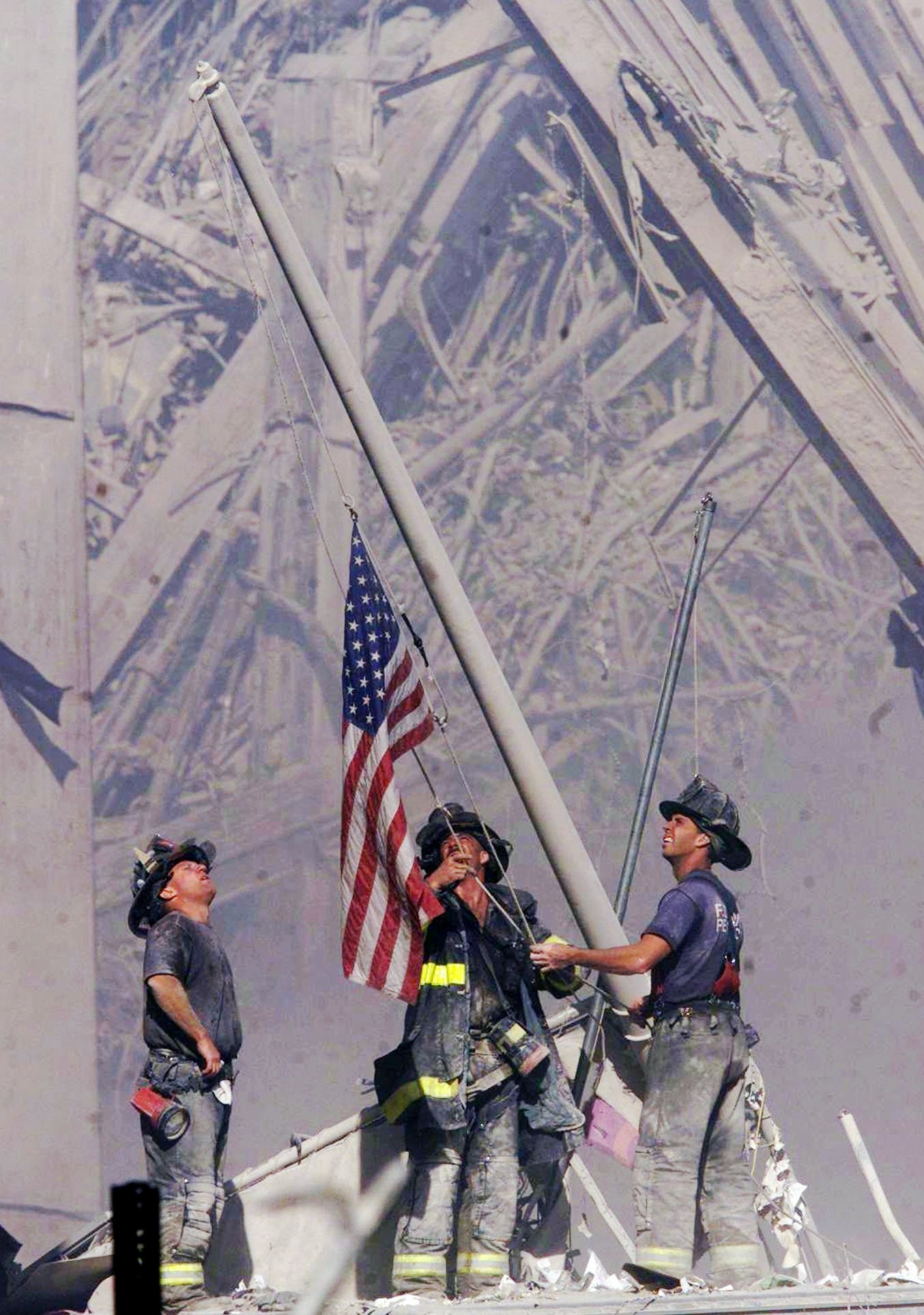
From loss, one often finds new growth. While forest fires can destroy whole woods, new life is sprouted from the ashes and a new-ecosystem is formed. Similarly, on September 11, 2001, attacks across the United States led to the deaths of nearly 3,000 innocent victims. Later, countless others would loose their lives from fighting in the Iraq war that followed. In addition, the United States and world would be faced with an emotional, security, health, and economic effects as well as countless other challenges. Yet through all this turmoil, the United States only grew stronger as new growth formed from the ashes of this loss. As the New York City mayor, Rudy Giuliani, stated, "We will rebuild. We're going to come out of this stronger than before, politically stronger, economically stronger."

In chapter seven, the story of Le Ly's journey reaches its full climax as she discovers how to live. From her father's death, Le Ly learns that "a willingness to live" is more powerful than "a willingness to die." (215) She also learns that love can not remove all obstacles, but it can create a smoother path. While overcoming the sadness of death, Le Ly and her family are drawn together again to morn his death and are able to work together to find the strength to move on. She is finally able to understand that her loyalty does not have to lie with the Viet Cong or Americans, but rather, it lies with her family, particularly, in an effort to protect her son. She understands that the purpose of her life is to be a warrior for those she loves.
From loss, one often finds new growth. While forest fires can destroy whole woods, new life is sprouted from the ashes and a new-ecosystem is formed. Similarly, on September 11, 2001, attacks across the United States led to the deaths of nearly 3,000 innocent victims. Later, countless others would loose their lives from fighting in the Iraq war that followed. In addition, the United States and world would be faced with an emotional, security, health, and economic effects as well as countless other challenges. Yet through all this turmoil, the United States only grew stronger as new growth formed from the ashes of this loss. As the New York City mayor, Rudy Giuliani, stated, "We will rebuild. We're going to come out of this stronger than before, politically stronger, economically stronger."
 |
| Before |
 |
| After |
Chapter Six- A Question of Faith
Le Ly is challenged with overcoming obstacles and finding trust. She finds that "what she lacked in faith" she "made up for in hope" as she uses optimisim as a source of energy to move forward (168). She became fearful for the life of her father who was alone and chriticized by the village. She was also fearful of men due to her past experiences of brutallity and she was challenged to rediscover trust.
"It occured to me then that many things I had previously seen from one side might, in fact, have other prospectives." (185)
Le Ly's motivation to see the world from a more objective view came from the actions of those around her that defiled normal stereotypes of the time. She learned that not all men were cruel and that cultural or racial classifications were only a method of exterior devision. True differences in people could only be defined by personality differences. As a result, Le Ly began working with people who were often avoided by selling on the back market to all men she found trustworthy including those with glasses who had originally been seen as dangerous or Americans who were capable of imprisoning her.
Descrimination continues to be a component of society today as people struggle to put faith in one another based on age, gender, race, or cultural differences. From the beginning of time, people have been seperated by physical differences including the enslavement of Isralites in Biblical times to the enslavement of Africans in one's own colonial history. Countless cases of descrimination are fought in courts across the country and around the world as seen in the 2009 US Statistics of Discrimination and Retaliation. To see these statistics, please visit http://www.eeoc.gov/eeoc/statistics/enforcement/index.cfm.
"It occured to me then that many things I had previously seen from one side might, in fact, have other prospectives." (185)
Le Ly's motivation to see the world from a more objective view came from the actions of those around her that defiled normal stereotypes of the time. She learned that not all men were cruel and that cultural or racial classifications were only a method of exterior devision. True differences in people could only be defined by personality differences. As a result, Le Ly began working with people who were often avoided by selling on the back market to all men she found trustworthy including those with glasses who had originally been seen as dangerous or Americans who were capable of imprisoning her.
Descrimination continues to be a component of society today as people struggle to put faith in one another based on age, gender, race, or cultural differences. From the beginning of time, people have been seperated by physical differences including the enslavement of Isralites in Biblical times to the enslavement of Africans in one's own colonial history. Countless cases of descrimination are fought in courts across the country and around the world as seen in the 2009 US Statistics of Discrimination and Retaliation. To see these statistics, please visit http://www.eeoc.gov/eeoc/statistics/enforcement/index.cfm.
Chapter Five- Losing Love
With the new challenges of being an unwed mother in a society where this was condemned, Le Ly is faced with new challenges and must discover love more deeply. In chapter five, Le Ly confronted with the truth that the father of her child does not or can not love her. She is also confronted by her mother who encourages Le Ly to try to kill her child by potions. In addition, Le Ly reflects upon the loss of her beloved brother who had been her best friend and all war victims. She learns that death and tragedy are inevitable parts of life that challenge love.
"Sometimes it is an act of compassion to simply do nothing at all." (144)
Le Ly had the choice of making life for the father of her child, Anh, worse, but rather she decided to do nothing at all. Le Ly could have killed her child and not been burdened by extra costs, but rather she chose simply to do nothing at all. Le Ly could have tried to prevent her brother from fighting and leaving but she new he did not want to go either and that challenging authorities would only cause more harm, so as an act of compassion, she chose simply to do nothing at all.
Daily, people make decisions or are effected in ways that can change not only their lives, but those near them too. Friends and family members of cancer patients are constantly challenged to support and love a person when there is nothing they can do to help or protect them. While many family members and friends of soldiers wish they could prevent a soldier from fighting, it is out of love for not only their friend or relative, but the nation and world as well that they do nothing to prevent them from fighting. It is our of love that a parent lets their child fall or be hurt so that in the end, the person can be stronger and better prepared for the future.
"Sometimes it is an act of compassion to simply do nothing at all." (144)
Le Ly had the choice of making life for the father of her child, Anh, worse, but rather she decided to do nothing at all. Le Ly could have killed her child and not been burdened by extra costs, but rather she chose simply to do nothing at all. Le Ly could have tried to prevent her brother from fighting and leaving but she new he did not want to go either and that challenging authorities would only cause more harm, so as an act of compassion, she chose simply to do nothing at all.
Daily, people make decisions or are effected in ways that can change not only their lives, but those near them too. Friends and family members of cancer patients are constantly challenged to support and love a person when there is nothing they can do to help or protect them. While many family members and friends of soldiers wish they could prevent a soldier from fighting, it is out of love for not only their friend or relative, but the nation and world as well that they do nothing to prevent them from fighting. It is our of love that a parent lets their child fall or be hurt so that in the end, the person can be stronger and better prepared for the future.
Chapter Four- Losing the Way
As Le Ly continues to grow into a mature lady, she is forced to begin her own life. At first, her choices lead her astray from the customs and practices of the time and she is challenged to discover herself. She is exiled from her community, the only community she has ever known, after being brutally and emotionally violated wrongly by those she had tried to help. Le Ly and her mother are forced to begin a new life and are challenged to learn how to survive in a confusing world different from their own safe farm. Le Ly describes her struggles using tautology as shown below to describe her feelings.
"I had no idea what these confused new feelings could mean." (124)
Her journey leads to her search for a better life as she becomes an unwed mother and her search for the strength to move on as she returns to Vietnam in 1986. Her struggles for acceptance and search for new life are similar to those faced by nearly every person today. From school to businesses and politics, people fight daily to find support and love from others. Whether one has moved to a new place or is trying to find a new hope in life, people constantly struggle to understand and find their way. Guided by their feelings, people look to the past in hope to find a better future like Le Ly on her return journey to Vietnam. No matter how smooth the path, journeys are unpredictable and one may "lose the way."
"I had no idea what these confused new feelings could mean." (124)
Her journey leads to her search for a better life as she becomes an unwed mother and her search for the strength to move on as she returns to Vietnam in 1986. Her struggles for acceptance and search for new life are similar to those faced by nearly every person today. From school to businesses and politics, people fight daily to find support and love from others. Whether one has moved to a new place or is trying to find a new hope in life, people constantly struggle to understand and find their way. Guided by their feelings, people look to the past in hope to find a better future like Le Ly on her return journey to Vietnam. No matter how smooth the path, journeys are unpredictable and one may "lose the way."
Chapter Three: Open Wounds
As chapter three begins, Le Ly is boarding the plane for her return journey to Vietnom. She is affraid of how her family might welcome her due to the "open wounds" remaining from her departure in the 1970s. She also fears the "open wounds" that the Vietnom war might have left on a struggling country. As her new journey begins, she reflects upon the journey she has taken to get here and remembers her own wounds in her life.
During the war, Le Ly was taken captive several times due to her mistakes and the mistakes of others who falsely accused her. She is brutally beaten and morally scared from her experiences. She must learn to trust in a world that is untrustworthy and how to live in a world of death. Her experiences are beyond any of a normal child's as she sees suffering and death constantly. The brutallity she witnesses and experiences is beyond that of any movie rated "X" or "NC-17" and worse than most adults today could handle. Her family, community, and world became torn apart as war ripped through Vietnam. Still, though, she finds hope through deductive reasoning like listed below.
"Living things breathe and as long as I could feel my own breath I would know I was alive." (91)
As Le ly described her experiences in the war, I was continually reminded of those who lost their lives in the World War II Holocaust. Thousands of people were murdered, some due to their own mistakes while most lost their lives do to the mistakes of others. The people effected by the Holocaust witnessed unimaginable brutallity and the worse of human nature yet still some survived and learned to forgive.
To learn more about the Holocaust, please visit http://www.ushmm.org/holocaust/. For further reading about the experiences of war, especially the Holocaust, please try reading Night or The Diary of a Young Girl.
During the war, Le Ly was taken captive several times due to her mistakes and the mistakes of others who falsely accused her. She is brutally beaten and morally scared from her experiences. She must learn to trust in a world that is untrustworthy and how to live in a world of death. Her experiences are beyond any of a normal child's as she sees suffering and death constantly. The brutallity she witnesses and experiences is beyond that of any movie rated "X" or "NC-17" and worse than most adults today could handle. Her family, community, and world became torn apart as war ripped through Vietnam. Still, though, she finds hope through deductive reasoning like listed below.
"Living things breathe and as long as I could feel my own breath I would know I was alive." (91)
As Le ly described her experiences in the war, I was continually reminded of those who lost their lives in the World War II Holocaust. Thousands of people were murdered, some due to their own mistakes while most lost their lives do to the mistakes of others. The people effected by the Holocaust witnessed unimaginable brutallity and the worse of human nature yet still some survived and learned to forgive.
To learn more about the Holocaust, please visit http://www.ushmm.org/holocaust/. For further reading about the experiences of war, especially the Holocaust, please try reading Night or The Diary of a Young Girl.
Chapter Two: Fathers and Daughters
As the story progresses, Le Ly informs the reader of the events occurring around her village. She explains how the war has developed into a violent force that has divided both the nation of Vietnam and her own family. In the second chapter, Le Ly focuses on her relationship with her father and the moments they share working together in the fields. She describes the hardships war has caused and her own innocence in understanding which side to support. She reminds the reader that the truth of goodness is not always clear as her own knowledge is controlled by the government and teachers she has. She is uncertain of who to support as her siblings go off to separate sides. Most importantly though, she leans of the sacrifice of war as her father tries to protect her.
"As usual, my father played an important role in keeping me safe and alive...For me and most other children, the new war was still an exciting game. For my father, it was a daily gamble for life itself." (47)
Le Ly has become involved in the war as she serves as a spy for the Viet Cong army. This position puts her in constant danger and as a young girl, she is often too inexperienced to know how to avoid trouble. Her father, however, knows of the implications that could arise and works to protect Le Ly. He acts as her scapegoat and puts himself in such a position, that his own life could be at risk. His love shows the compassion and protection of a father and the bond between fathers and daughters.
Steven Curtis Chapman describes beautifully the love of a father for his daughter in the song "Cinderella". The hardships this father face are similar to the hardships of war while his love for his daughter is like that of peace, but on a very different scale. He describes both hardships and love through a father's eye in the lyrics as listed below. One may listen to "Cinderella" at http://stevencurtischapman.com/cinderella.htm
"She spins and she sways to whatever song plays, without a care in the world. And I'm sitting here wearing the weight of the world on my shoulders. It's been a long day and there's still work to do, she's pulling at me saying 'Dad I need you!'"
"As usual, my father played an important role in keeping me safe and alive...For me and most other children, the new war was still an exciting game. For my father, it was a daily gamble for life itself." (47)
Le Ly has become involved in the war as she serves as a spy for the Viet Cong army. This position puts her in constant danger and as a young girl, she is often too inexperienced to know how to avoid trouble. Her father, however, knows of the implications that could arise and works to protect Le Ly. He acts as her scapegoat and puts himself in such a position, that his own life could be at risk. His love shows the compassion and protection of a father and the bond between fathers and daughters.
Steven Curtis Chapman describes beautifully the love of a father for his daughter in the song "Cinderella". The hardships this father face are similar to the hardships of war while his love for his daughter is like that of peace, but on a very different scale. He describes both hardships and love through a father's eye in the lyrics as listed below. One may listen to "Cinderella" at http://stevencurtischapman.com/cinderella.htm
"She spins and she sways to whatever song plays, without a care in the world. And I'm sitting here wearing the weight of the world on my shoulders. It's been a long day and there's still work to do, she's pulling at me saying 'Dad I need you!'"
Subscribe to:
Posts (Atom)